What Are the Pros and Cons of Being an Industrial Firefighter?
 Written By: Jeff Kirschner, General Manager
 Written By: Jeff Kirschner, General Manager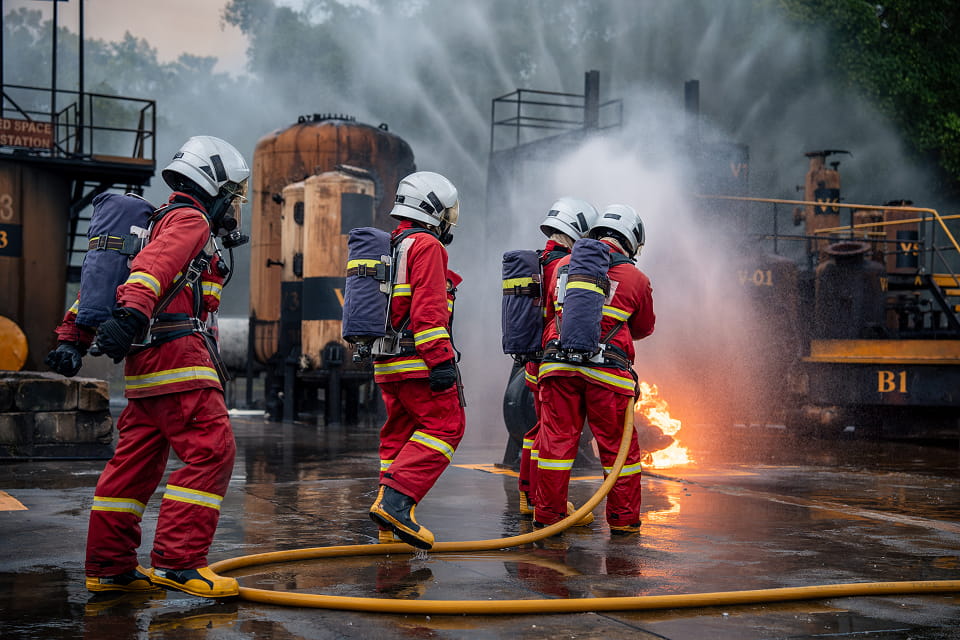
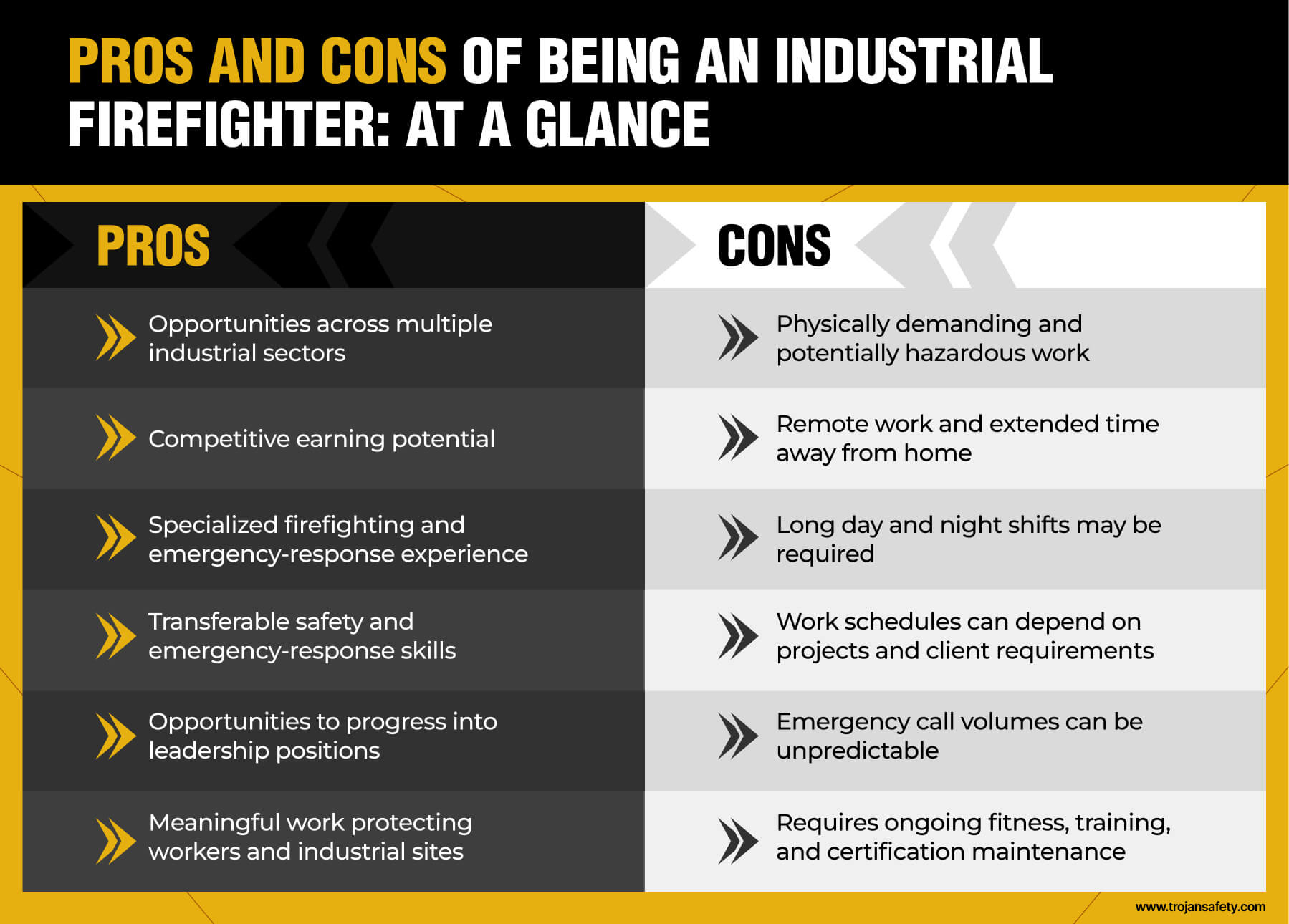
Industrial firefighting can be a rewarding career for those seeking hands-on emergency response work in industrial settings. However, the role also comes with physical demands, remote work, long shifts, and exposure to high-risk environments.
This article covers the advantages and challenges of industrial firefighting and what to expect when pursuing an industrial firefighting career with Trojan Safety.
Having an industrial firefighting job helps individuals build specialized skills and offers opportunities for career advancement.
Industrial firefighting can offer strong career stability because the skills are transferable across industries that require trained emergency-response personnel. Oil and gas, mining, pulp and paper, forestry, and construction operations all face fire, rescue, and hazardous-material risks that can create ongoing demand for qualified firefighters.
Because industrial firefighters work across various industries, they can gain broad experience rather than staying in a single sector. That breadth can make experienced firefighters more adaptable as project activity and hiring needs shift across Western Canada.
Industrial firefighters gain hands-on experience in fire suppression, hazardous materials response, rescue, and emergency preparedness. Depending on the role and worksite, firefighters may also complete additional training in areas such as advanced industrial First Aid, high-angle rescue, fall protection and rescue, and H2S safety supervision.
Experienced industrial firefighters can advance into crew leadership, training, emergency planning, supervision, and fire-service management.
Progression depends on the employer, but greater operational experience, additional certifications, and demonstrated leadership can open the door to more senior responsibilities.
The main challenges of industrial firefighting are the physical demands, safety risks, extended shifts, and work locations that may require significant time away from home.
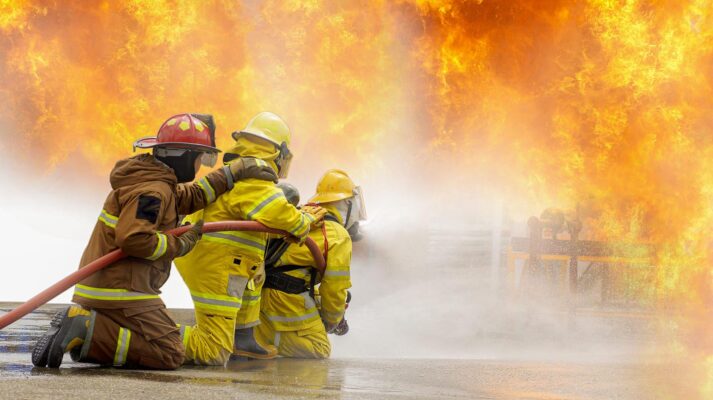
Industrial firefighters may need to perform strenuous work while wearing protective equipment and operating in environments involving fire, hazardous substances, heavy equipment, or extreme temperatures.
Training, PPE, emergency procedures, and site planning help manage these risks, but industrial firefighting remains a safety-sensitive occupation.
Many industrial operations are located outside major population centres, which can mean travelling to remote sites and staying in camp accommodations for several days or weeks at a time.
Rotational schedules can be appealing to people who prefer concentrated work periods followed by longer stretches of scheduled time off. However, these schedules can be challenging for people who prefer to return home every day.
Before accepting a position, candidates should understand the work location, rotation, travel requirements, and accommodation arrangements.
Industrial firefighters must be ready to respond even when emergency call volume is low or unpredictable. Industrial firefighter schedules are typically project- or rotation-based and can involve several consecutive 12-hour day or night shifts.
Full-time personnel are available 24/7 to mobilize industrial fire services when clients need emergency support. Due to extended rotational schedules, firefighters are required to maintain continuous operational readiness throughout their shift, regardless of emergency occurrence.
Industrial firefighter job satisfaction often depends on how well the demands, responsibilities, and working environment align with a person’s strengths and expectations.
For many industrial firefighters, the most rewarding part of the job is knowing their work directly contributes to protecting workers, facilities, and operations during high-risk situations.
The role can also provide a strong sense of teamwork. Firefighters train closely with their crews, rely on one another during emergency responses, and apply specialized skills in situations where preparation and quick decision-making matter. Because industrial sites can present complex hazards, the work also provides firefighters with opportunities to continue building their practical knowledge and confidence over time.
Some firefighters may also find the variety rewarding. Day-to-day responsibilities can include emergency readiness, equipment checks, drills, fire prevention, and incident response, so the job is rarely limited to a single type of task.
Industrial firefighter job satisfaction is mainly influenced by:
The industrial firefighter job market is influenced by industrial activity, project development, safety requirements, retirements, and employers’ need for trained emergency-response personnel.
Demand for industrial firefighters is highest where industrial operations require dedicated fire prevention, standby coverage, and emergency response support. This trend is particularly noticeable at sites where workers face elevated risks from fire, hazardous materials, heavy equipment, hot work, or remote operating conditions.
Hiring demand can increase during construction projects, facility expansions, shutdowns and turnarounds, maintenance periods, drilling and completions, and other higher-risk activities that require trained emergency-response personnel on site.
Industrial firefighters are commonly employed or contracted in sectors including:
Working across various industrial sectors gives qualified personnel the opportunity to gain broad experience as project activity and emergency-response needs change.
Industrial firefighting can provide a progression from frontline response work to supervisory, training, emergency management, and fire service leadership positions.
The typical entry path to industrial firefighting begins with obtaining the firefighting, First Aid, safety, and licence qualifications required by the employer.
Employers, such as Trojan Safety, commonly look for firefighter qualifications aligned with one or both of the following standards:
New industrial firefighters then develop practical experience responding to emergencies, maintaining equipment, participating in drills, and working within site-specific safety procedures.
With experience, industrial firefighters may progress into roles such as:
An industrial fire chief oversees firefighting and fire-prevention operations at an industrial site. Responsibilities can include supervising personnel, developing emergency-response procedures, coordinating firefighting strategies, managing resources, and maintaining operational readiness.
Certifications that can support industrial firefighter career advancement include:
Certification requirements vary by employer and position, so firefighters should confirm which qualifications are required for their intended career path.
Trojan Safety supports industrial firefighting careers through employment opportunities, hands-on industrial experience, ongoing training, and pathways into other areas of industrial safety and emergency response.
Trojan Safety provides several opportunities for continued development, including:
To explore industrial firefighter opportunities in Alberta or BC, view our current opportunities with Trojan Safety.
Previous firefighting employment is not always required, but employers typically expect candidates to already hold relevant firefighting and safety certifications.
Trojan Safety currently requires qualifications including NFPA 1001 Level 1 and 2, NFPA 1081, Occupational First Aid or equivalent, and H2S training for its industrial firefighter positions. Specific experience requirements can vary by role and site.
Median firefighter wages are approximately $48.43 per hour or $100,700 per year in Alberta and $50.00 per hour or $104,000 per year in British Columbia. Industrial firefighter compensation may also include overtime, shift premiums, day rates, or rotational pay structures.
Industrial firefighting can include full-time, rotational, project-based, temporary, or on-call positions. The structure depends on the site and employer. Some facilities need continuous emergency-response coverage, while other positions are tied to particular projects, shutdowns, or periods of increased activity.
Industrial firefighting can be a good career for people who enjoy hands-on emergency response, teamwork, and challenging work environments. It can offer competitive earning potential, specialized skills, and opportunities for advancement. However, candidates should also be comfortable with physically demanding work, long shifts, industrial hazards, and potentially spending extended periods away from home.