What Is It Like To Be An Oilfield Medic?
 Written By: Jeff Kirschner, General Manager
 Written By: Jeff Kirschner, General Manager
Oilfield medics in Western Canada are likely to have better job satisfaction when their role is clearly defined, schedules are reasonably predictable, and employers provide proper equipment, include medics in emergency response planning, and offer post-incident support.
Stress is often higher in remote settings, especially when medics manage serious incidents with limited backup, long transport or EMR response times, and little access to debriefing or mental health resources. Career progression is possible, but it usually requires deliberate planning, added certifications, and a move toward leadership or safety-focused roles such as safety advisor, HSE coordinator, or industrial safety specialist.
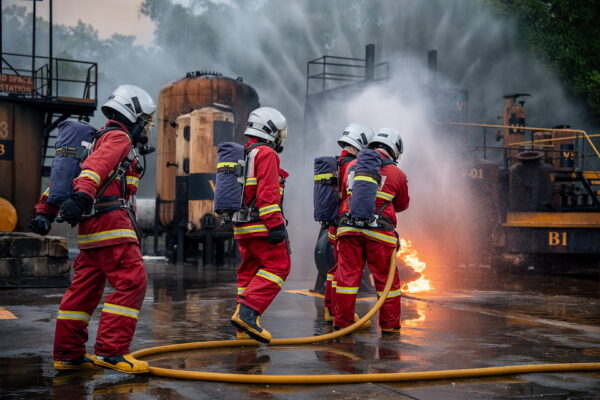
An oilfield medic is a medical professional deployed to oil and gas and other remote industrial worksites, including drilling operations, completions, plant turnarounds, and camps, to provide on-site emergency care, maintain medical readiness and equipment, complete required documentation, and coordinate with site leadership and EMR when needed.
In Canada, requirements vary by province and employer. In Alberta and British Columbia, oilfield medics commonly hold EMR, PCP, or ACP credentials, and provincial registration or licensing is required when practicing at those levels. Employers often also require site-specific safety certifications such as H2S Alive, WHMIS, TDG, and other tickets.
Unlike hospital or urban EMR settings, oilfield medics may work in remote or less-accessible locations where transport to definitive care can be significantly delayed. As a result, they often need to assess, stabilize, monitor, and manage patients more independently and for longer periods until transport is available.
Oilfield medics in Canada follow a combination of provincial healthcare regulations, occupational health and safety (OHS) requirements, and site-specific emergency response procedures. These protocols are designed to match the risks of remote and high-hazard industrial environments such as oil and gas sites.
While exact requirements vary by province and employer, most oilfield medic roles are guided by the following core protocols:
Oilfield medics must work within the scope defined by their provincial regulator (such as the Alberta College of Paramedics or the Emergency Medical Assistants Licensing Board in British Columbia). This determines what assessments, treatments, and medications they can provide independently.
Industrial worksites are required to maintain an ERP that outlines procedures for medical emergencies, fires, hazardous gas releases, and evacuations. Medics are typically involved in implementing and supporting this plan during incidents.
On sites with sour gas or hazardous atmospheres, medics are expected to understand H2S risks, alarm systems, muster procedures, and the use of respiratory protective equipment such as SCBA or supplied air systems.
Medics must be familiar with site-specific chemicals, Safety Data Sheets (SDS), and first aid considerations for hazardous exposures.
Accurate documentation, including first aid records, incident reports, and Workers’ Compensation Board (WCB) reporting where required, is an important part of compliance and site safety processes.
Medics are expected to follow standard infection control practices and maintain patient confidentiality in accordance with applicable healthcare and privacy regulations.
During incidents, medics coordinate with site supervisors, safety personnel, and external emergency services to support patient care and safe transport.
In some roles, medics may also assist with site tracking or muster support, depending on the employer and site setup.
Overall, oilfield medic safety protocols are shaped by both regulatory requirements and the specific hazards of each worksite, and are regularly reviewed as site conditions, risks, and operations evolve.
Job satisfaction and stress in oilfield medical roles are closely linked to how well the working environment matches the demands of the job. When medics have the authority, training, equipment, and organizational support to respond confidently, job satisfaction is generally higher. When responsibility is heavy and support is limited, such as unclear escalation protocols, solo coverage on high-risk sites, or little time for post-incident recovery, stress can build quickly and increase the risk of burnout.
Employers who treat on-site medical coverage as an integrated part of their safety program, rather than a basic staffing requirement, are generally better positioned to support retention, performance, and long-term role sustainability.
Work-life balance is an important factor in oilfield medic job satisfaction, and it can vary significantly by employer, site, and rotation schedule. Rotational work often means extended time away from home and family, which some medics value for the concentrated time off, while others find it difficult to sustain.
In Western Canada, oilfield and industrial medic schedules vary, with rotations such as 14 days on and 7 days off appearing in job postings, while other schedules depend on the project, location, and employer. In general, longer rotations mean more consecutive time away from home, which can increase strain even when the time off is longer.
Medics who know their schedule well in advance are generally better able to plan around time off. Unpredictable scheduling or frequent last-minute changes can add strain.
Remote camp conditions, including food, accommodation, connectivity, and the ability to rest or decompress between calls, can affect how sustainable a long rotation feels.
Whether a medic is assigned to days or nights can affect sleep, fatigue, and overall well-being during a rotation. If a role requires switching between day and night shifts, that disruption can increase fatigue and may affect clinical performance.
Solo coverage with limited backup can increase workload and psychological strain, especially on remote or high-risk sites.
Employers that provide transparent scheduling, adequate coverage, and decent camp conditions are generally better positioned to support retention and long-term role sustainability.
Job satisfaction in oilfield medical roles is closely tied to how well supported and professionally valued medics feel on site. When the role is clearly defined and properly resourced, it can be deeply rewarding. For many medics, the appeal includes autonomy, strong working relationships on site, and compensation that can make the demands of remote work feel worthwhile.
A clearly defined clinical role, site-specific protocols, and supervisor support can help medics make decisions with more confidence.
Certifications and site-specific training should reflect the actual risks present, including remote-response realities and the types of incidents most likely to occur.
Maintaining medical equipment, complete supplies, and a dedicated space for assessment, privacy, and documentation can make the role more sustainable and effective.
Medics are generally better supported when they are included in the site safety program and emergency response plan (ERP), supporting communication, drills, and incident reviews, rather than being treated as a stand-alone service.
Rotations, shift patterns, and staffing support should reflect the site’s risk level and operational demands, especially on remote or high-risk worksites.
Access to critical-incident follow-up, peer support, or EAP resources can be especially important after serious calls or prolonged periods of high stress.
Competitive pay, inclusion in safety discussions, and visible paths into more senior industrial or safety roles can all support longer-term job satisfaction.
In 2023, 1,057 workplace fatalities were recorded in Canada based on accepted claims reported through workers’ compensation boards, according to the Canadian Centre for Occupational Health and Safety. In oil and gas and other remote industrial settings, hazards such as heavy equipment, confined spaces, and delayed access to emergency care can create high-pressure conditions for on-site responders, leading to high stress levels.
Severe trauma, medical emergencies, and fatalities can create a significant emotional burden, especially when they are managed without immediate backup and with delayed access to definitive care.
Remote camp work can increase stress by reducing access to support, limiting connection to home, and making it harder to decompress after difficult calls.
Stress increases when it is unclear who has the final say during an incident, especially if site priorities and clinical judgment are not aligned.
Single-medic coverage on high-risk sites can add pressure, particularly when there is no backup support during emergencies or periods of high demand.
No structured debrief, no reset period after traumatic calls, and no real pathway to psychological support can lead to oilfield medic burnout.
For oilfield medics, long-term job satisfaction often comes down to support, structure, and whether the role is treated as a meaningful part of site safety. Trojan Safety builds its oilfield medic roles around those priorities, with clear expectations, practical support, and a strong understanding of how remote industrial sites actually operate.
What can make an oilfield medic role with Trojan Safety more sustainable over the long term:
Trojan Safety has provided safety services across Western Canada for more than 30 years, supporting industries including oil and gas, construction, mining, forestry, and pulp and paper.
If you are looking for an oilfield medic job in Western Canada that offers structure, support, and a long-term path in industrial safety, explore current opportunities with Trojan Safety.
Oilfield medics in Canada may work as contractors or full-time employees, and each option has trade-offs depending on career stage and priorities.
Contract roles often offer higher day rates and more flexibility in choosing rotations or sites. However, income may be less consistent, and contractors are typically responsible for maintaining certifications and covering their own benefits.
Full-time roles usually provide more stable income, employer-covered training, and benefits such as health and dental coverage. Full-time medics may also be more integrated into a company’s safety program and have clearer access to career progression and support.
Early-career medics often benefit from full-time roles that provide structure and training, while more experienced medics may prefer contract work for flexibility and earning potential.
Oilfield medics and registered nurses are both regulated healthcare professionals, but they work in very different environments and scopes of practice.
Oilfield medics typically work on remote industrial sites, including oil and gas projects, where they may be the only medical provider on site. Their role focuses on emergency assessment, stabilization, monitoring, and coordinating transport to higher levels of care. Most hold EMR, PCP, or ACP certification, along with site-specific safety training such as H2S Alive, WHMIS, TDG, and other employer-required tickets. Work is usually rotational and may involve extended time away from home.
Registered nurses (RNs) work in hospitals, clinics, long-term care, and community settings as part of a broader healthcare team. Their scope of practice is broader in terms of ongoing patient care, medications, and care planning. RNs require a nursing degree or diploma and provincial registration, and typically work scheduled shifts with more consistent access to support and resources.
Neither role is “higher” than the other. Oilfield medics focus on independent, remote response and emergency decision-making, while nurses focus on continuous care within a structured clinical environment.
Many oilfield medics are trained paramedics, but the work environment changes how those skills are used.
Oilfield medics work at fixed or semi-remote industrial sites. Call volume is often lower, but medics may need to manage patients for longer periods due to delayed hospital access or EMR transport. They are typically integrated into the site’s safety program and may have additional responsibilities related to emergency planning and coordination.
Paramedics (urban or rural) work on ambulances responding to calls across a region. They usually have quicker access to hospitals and additional resources, with a focus on rapid response, treatment, and transport. They operate within a structured system that includes dispatch, medical oversight, and defined response protocols.
The key difference is context. Oilfield medics often work more independently and manage longer care timelines, while paramedics work in a higher-volume, system-supported environment with faster patient handoff.
Oilfield medic and flight paramedic roles both appeal to practitioners looking for non-traditional work environments, but they differ in training, pace, and long-term career direction.
Oilfield medics work on remote industrial sites and manage a wide range of medical situations, often independently. Entry is possible at the EMR, PCP, or ACP level, depending on the role and site. These positions typically use rotational schedules and may offer strong earning potential, with career progression often leading into industrial safety, HSE roles, or site leadership.
Flight paramedics work in air medical transport, responding to high-acuity interfacility transfers and emergency scenes as part of a specialized team. Most roles require ACP certification, with additional critical care training and several years of experience. Work is based out of an air base and follows structured shift rotations, with a focus on advanced clinical care in transport environments.
In general, flight paramedicine requires a longer and more specialized clinical pathway, while oilfield medic roles offer earlier access to remote work and a different career trajectory that may extend into safety and leadership roles.
An oilfield medic career progression can lead to both senior medical roles and broader industrial safety positions, depending on experience and additional training.
Common career paths include:
While progression is possible, it often depends on gaining both field experience and additional safety-related certifications.
Yes, moving from oilfield medic to safety manager is a common and achievable career path in the industrial sector.
Oilfield medics often build relevant experience by:
To transition into a safety manager role, most medics also pursue formal safety credentials, such as:
The transition timeline varies, but many medics move into safety advisor roles first and then progress to management positions as they gain experience and credentials.
Oilfield medic job growth potential depends on industry activity, location, and individual career development, but there are several paths for long-term advancement.
Within the role itself, opportunities may include:
Beyond frontline work, growth often comes from expanding into industrial safety and leadership roles, such as HSE advisor, safety manager, or ERP specialist.
Because oilfield medics already work at the intersection of healthcare and workplace safety, those who add formal safety training tend to have more options and stronger long-term career mobility.