Types of First Aid Work in Canada: Career Paths, Roles, and Opportunities
 Written By: Jeff Kirschner, General Manager
 Written By: Jeff Kirschner, General Manager
First aid attendants in Canada work across a wide range of environments, from industrial worksites and construction projects to concerts, sporting events, and remote wilderness locations. The type of first aid work you pursue typically depends on your certification level, the province you work in, and whether you prefer contract or full-time employment.
For people considering first aid as a career, understanding the different types of first aid work available is essential. Certification levels such as Standard First Aid, Occupational First Aid (OFA), and Wilderness First Aid determine which industries you can work in, while provincial regulators such as WorkSafeBC or provincial occupational health authorities set requirements for employers and workers.
This guide explains the major types of first aid work in Canada, how industrial and event roles differ, the common employment structures, and how to choose the right path based on your lifestyle and career goals.
First aid work refers to the role of trained attendants who provide immediate medical care and emergency response before paramedics or hospital care are available. In Canada, first aid attendants are responsible for assessing injuries, stabilizing patients, documenting incidents, and coordinating with emergency medical services when necessary.
First aid attendants work in many industries where safety regulations require trained responders on-site. Common sectors include:
Certification requirements vary by province and workplace environment. In British Columbia, for example, the Occupational First Aid (OFA) system defines Level 1, Level 2, and Level 3 certifications. Other provinces use comparable standards regulated by workplace safety authorities, such as:
Canada does not have a single national certification standard for first aid attendants. Instead, provincial occupational health and safety regulations determine which certification level is required based on: the number of workers on site, the industry risk level, and the distance from medical services.
Because of these varying requirements, first aid careers in Canada can range from part-time event work in urban settings to full-time industrial safety roles in remote camps.
In Canada, two common first aid job paths are industrial first aid and event first aid. Both involve assessing injuries, providing immediate care, and deciding when escalation or emergency transport is needed, but the roles are distinct. Industrial first aid attendants typically work in higher-risk settings such as construction, oil and gas, mining, manufacturing, and other remote or hazardous worksites, where injuries can be more serious and employer or provincial requirements are often more rigorous. Event first aid attendants usually work in public settings such as concerts, festivals, community events, and sporting venues, where they more often manage minor injuries, illness, and crowd-related medical issues. The pace, environment, training expectations, and daily responsibilities can vary significantly between the two.
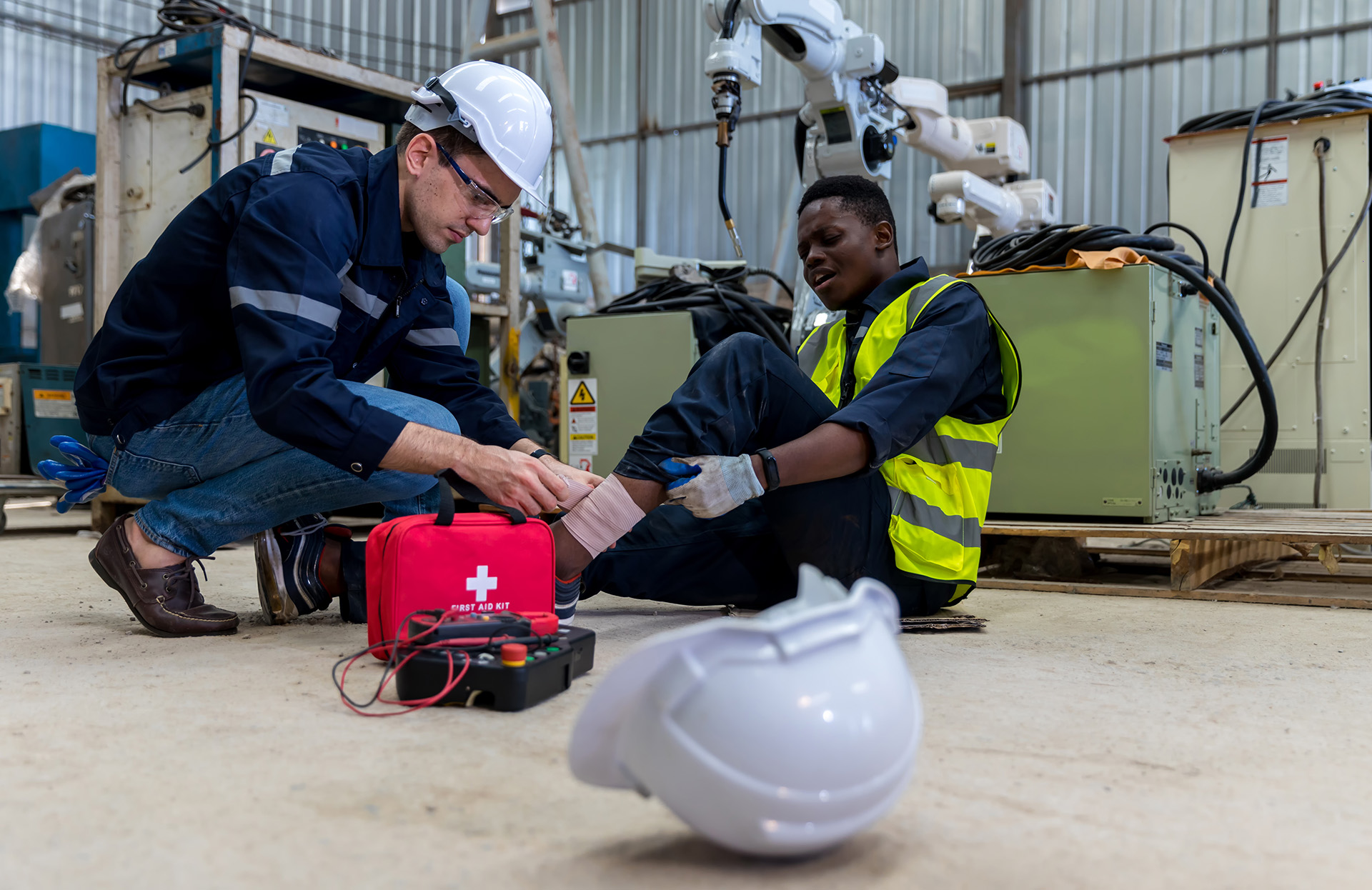
An industrial first aid attendant is a certified responder responsible for emergency medical care at industrial worksites such as oil and gas operations, forestry camps, mining sites, or construction projects. These environments typically involve higher risks, including heavy equipment, remote locations, and physically demanding work.
Industrial first aid attendants often work in remote camps or industrial facilities with rotational schedules, such as 14 days on, 7 days off, or similar shift rotations. The role can be physically demanding and requires strong decision-making in high-pressure situations, especially when emergency services may be hours away.
Typical pay averages around $29+ per hour in Alberta and $27+ per hour in BC, particularly in resource industries.
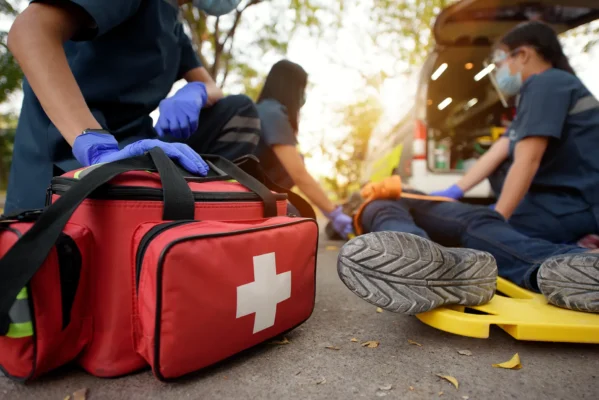
An event first aid attendant provides medical coverage for public or private gatherings such as concerts, marathons, sporting events, festivals, conferences, and corporate functions. Unlike industrial worksites, event environments are typically urban, temporary, and lower risk, with shifts tied to the event’s duration.
Event first aid attendants typically work with event organizers or private medical staffing companies that specialize in event coverage. Event-based work is often casual or seasonal, making it attractive for people seeking flexible schedules or supplemental income.
Typical hourly rates range from $18 to $30 per hour, depending on the event size and certification level.
| Factor | Industrial | Event |
| Typical Certification
Requirements |
OFA Level 2 or 3/EMR | Standard First Aid / EMR / OFA 2 |
| Setting | Remote worksites, camps | Venues, festivals, arenas, Urban work environments |
| Schedule | Rotational shifts, extended hours, longer shifts | Event-based, seasonal |
| Pay Range | $28–$45+ per hour
Tend to offer higher pay |
$18–$30 per hour |
| Employment Type | Contract or full-time | Mostly contract or casual, |
First aid attendants in Canada typically work under two employment structures: contract work or full-time employment. Contract roles tend to offer higher daily rates and schedule flexibility, but come with income variability and no employer-sponsored benefits. Full-time roles offer predictable income, benefits, and clearer career progression, but less control over scheduling and sometimes lower daily rates than top contract positions. Understanding the differences can help you decide which path fits your lifestyle and career goals.
Contract first aid work refers to short-term engagements with a specific client, project, or event. Many first aid attendants work through staffing agencies or take on projects independently.
Typical hourly rates range from $22 to $45+ per hour, depending on certification level and industry.
Full-time first aid attendants are permanently employed by a single company or organization.
Typical salaries range from $44,661 to $70,754 per year, depending on the industry and certification level.
Full-time industrial roles often require OFA Level 3 certification or equivalent experience, particularly in higher-risk industries.
Beyond industrial and event roles, there are several specialized types of first aid work across Canada.
Remote or wilderness first aid attendants work in environments where emergency services may be more than 60 minutes away. These roles are common in forestry operations, exploration camps, offshore projects, and wilderness tourism.
Workers typically require Wilderness First Aid (WFA) or Wilderness Advanced First Aid (WAFA) certifications in addition to occupational first aid training.
In non-clinical, healthcare-adjacent settings such as group homes, assisted living facilities, and community care programs, designated first aid attendants may be employed to provide emergency response coverage when medical staff are not consistently on site. These roles are often combined with other support or care responsibilities rather than standing alone as dedicated first aid positions, and certification requirements vary by province and employer.
Many schools and corporate workplaces designate employees with Standard First Aid certification to respond to workplace injuries.
While this is rarely a standalone career, it can be part of broader safety or administrative roles.

Choosing the right first aid career path depends on several practical factors, including certification level, lifestyle preferences, and income goals.
Your certification determines which roles are available to you.
People seeking flexibility may prefer contract work or event-based first aid roles.
Those looking for stability and benefits often pursue full-time industrial positions.
Industrial first aid jobs are concentrated in resource-heavy provinces such as:
Event first aid work is more common in urban centres.
Industrial first aid attendants typically earn more than event attendants, regardless of employment structure, driven by the higher-risk environment, more demanding certification requirements, and longer shifts. The comparison between contract and full-time pay within industrial roles is less straightforward than it appears. Contract roles may show a higher hourly or daily rate upfront, but contractors are responsible for their own taxes, have no employer-sponsored benefits such as health, dental, or disability coverage, and may experience gaps between rotations or assignments. When total compensation is factored in, full-time industrial roles are often comparable or more financially stable for most attendants, particularly earlier in their careers.
Industrial first aid attendants may expand their responsibilities into workplace safety roles such as safety coordinator or emergency response team member, particularly when combined with additional occupational health and safety credentials such as NCSO or CRSP certification. First aid experience alone does not typically qualify someone for OHS leadership roles; those positions generally require formal safety education, regulatory knowledge, and progressive safety experience. First aid training is best understood as a complement to a safety career rather than a direct pathway into one.
For those interested in paramedicine or emergency medical services, event-based first aid work can provide useful exposure to emergency care environments. However, entering paramedicine requires completing a formal Primary Care Paramedic (PCP) diploma program and obtaining provincial licensing. Experience in event first aid alone does not qualify someone for that transition.
The required certification depends on the workplace and the province. Entry-level event roles typically require Standard First Aid with CPR-C, while industrial worksites often require Occupational First Aid Level 2 or Level 3 or an equivalent provincial certification.
Hourly pay varies by industry. Event first aid attendants typically earn $18 to $30 per hour, while industrial first aid attendants may earn $28 to $45+ per hour. Full-time positions generally range from $44,611 to $70,754 per year, depending on experience and location.
Yes. First aid attendants are required in many industries due to workplace safety regulations. The role offers flexible entry points, strong demand in industrial sectors, and potential career advancement into safety management or emergency services.
Yes. Event first aid roles are commonly scheduled around evenings, weekends, and large public events, making them ideal for part-time work or supplemental income.
OFA (Occupational First Aid) Levels 1, 2, and 3 represent increasing levels of first aid training, primarily used in workplace safety programs in Canada, particularly in British Columbia. The higher the level, the more advanced the training and the higher-risk the worksites the attendant can support.
OFA Level 3 is the most advanced certification and is usually required for high-risk or remote industrial worksites such as oil and gas, forestry, and mining operations, where emergency medical services may be far away.