Rig Medic Duties and Responsibilities
 Written By: Jeff Kirschner, General Manager
 Written By: Jeff Kirschner, General Manager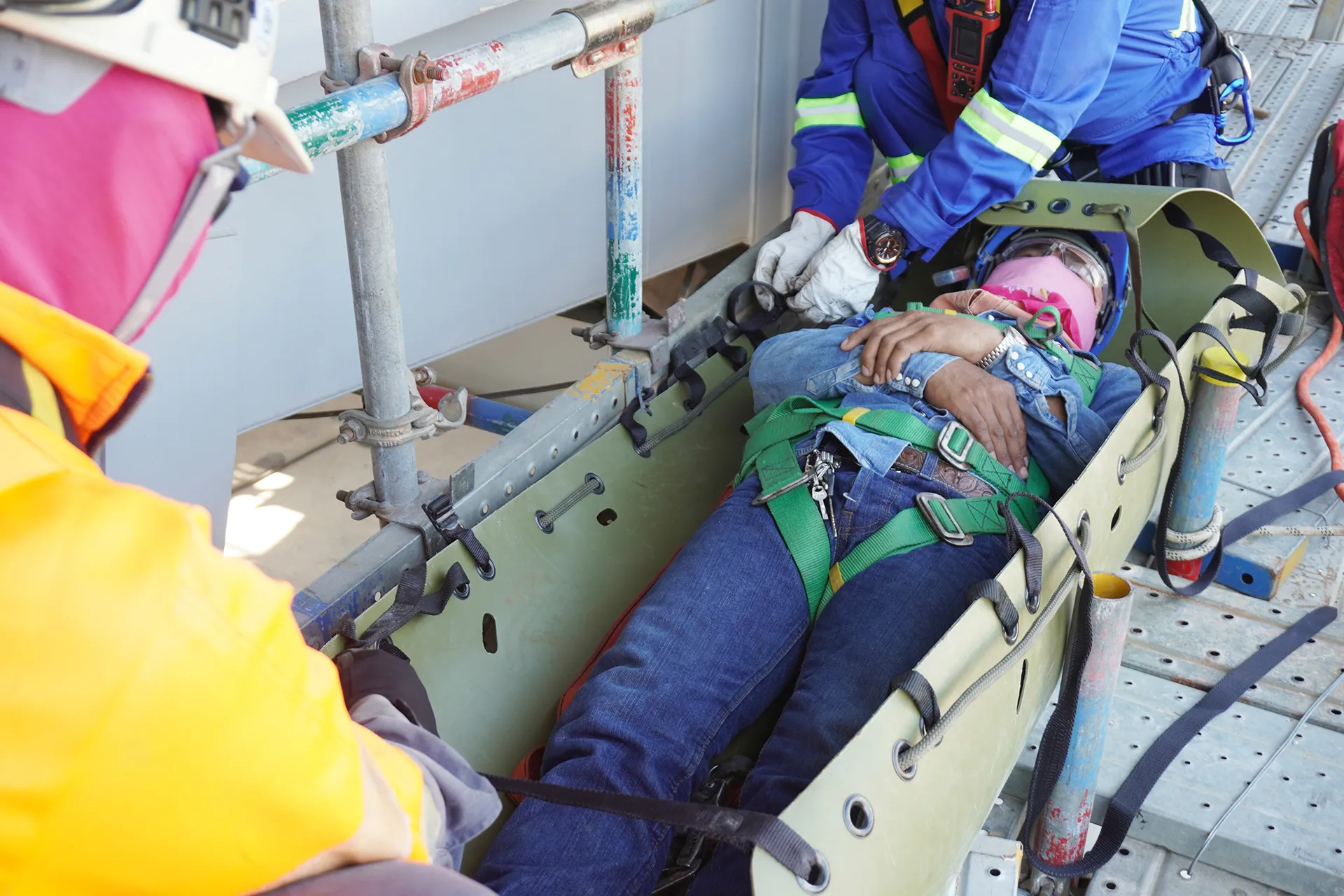
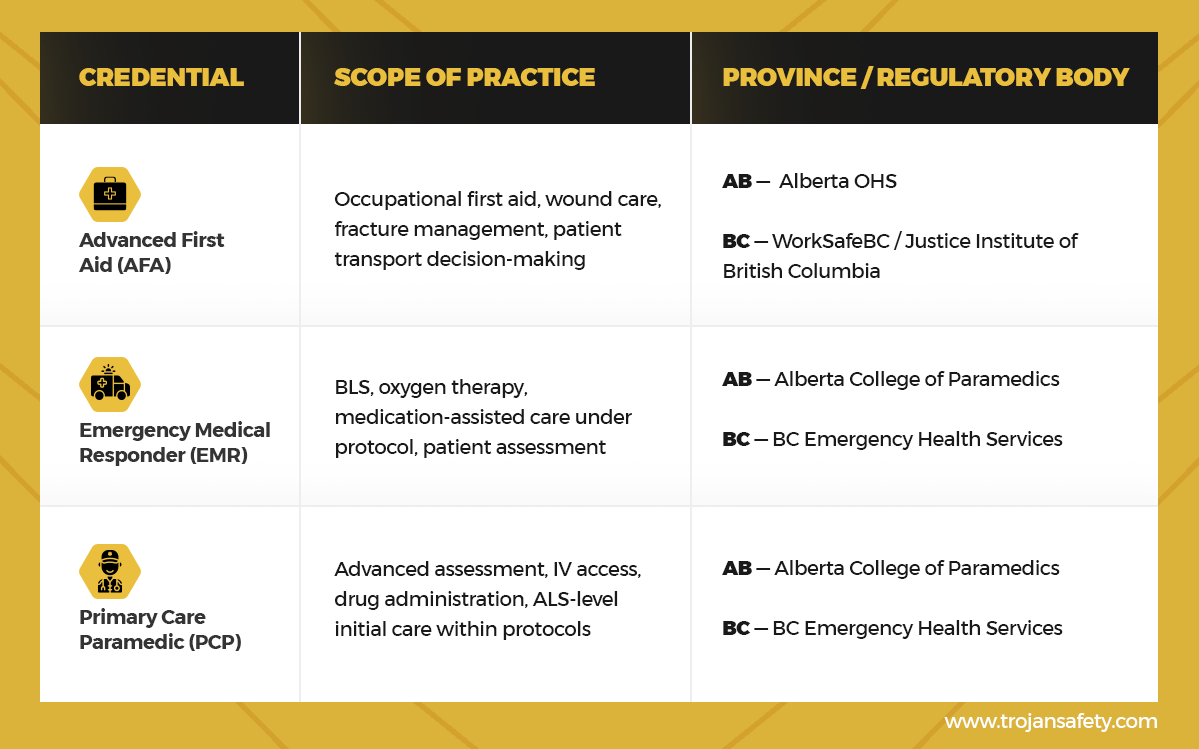
A rig medic is the onsite healthcare professional responsible for emergency medical response, day-to-day patient care, and safety compliance at remote oil and gas worksites. Each job site has different certification requirements ranging from Emergency Medical Responder (EMR), to Primary Care Paramedic (PCP), and Advanced First Aid (AFA).
A rig medic is the primary healthcare provider at an oilfield or drilling worksite, responsible for emergency response, occupational health monitoring, and medical administration in a remote environment. The rig medic is stationed at a mobile treatment centre (MTC) on site, not on call from a distant location. Their scope of practice varies by credential level.
Unlike a hospital paramedic, a rig medic must be self-sufficient: there is no backup team, no pharmacy counter, no specialist referral on-site. Because the role is individual, a rig medic must have a deep understanding of their duties, including emergency medical response, preventative care and occupational health, and medical administration and compliance. These duties can also vary by certification level, from EMR to PCP to AFA.
An Emergency Medical Responder (EMR) is a regulated healthcare professional registered with the Alberta College of Paramedics (ACoP) in Alberta or BC Emergency Health Services (BCEHS) in BC.
Within their scope of practice, EMRs:
A Primary Care Paramedic (PCP) is the entry-level paramedic designation in Canada, regulated by the Alberta College of Paramedics (ACoP) in Alberta and the Emergency Medical Assistants Licensing Board (EMALB) in BC. The PCP scope includes all EMR skills plus:
On a remote worksite, a PCP can initiate IV fluid resuscitation, monitor cardiac rhythm, and provide pharmacological pain management under standing orders, making them the appropriate credential for higher-acuity sites or larger drilling operations.
A First Aid Attendant is a worksite-designated healthcare provider certified under Advanced First Aid, and is trained to manage medical emergencies at remote or high-risk worksites more than 20 minutes from medical aid. Within their scope of practice, a First Aid Attendant can:
In British Columbia, Advanced First Aid may also be referred to as OFA3, its previous official title. Existing certificates remain valid, and the OFA3 name continues to be used in industry. In Alberta, it is simply called Advanced First Aid (AFA) and is recognized under Alberta OHS legislation.
Both are designed for remote work sites where workers may be more than 20 minutes from medical aid.
Rig medics on oil and gas worksites respond to a broad range of emergencies, and are often the only medical response due to the remote nature of the work. These emergencies can vary from traumatic injuries caused by heavy equipment to acute toxic exposures specific to the energy sector.
The reality is that most rig medic shifts are not dominated by major emergencies. When evaluating a rig medic position as a career, it’s important to understand what the role actually looks like on a typical day.
The rig medic role requires strong administrative discipline. Daily documentation is mandatory and must be completed accurately on every shift, regardless of whether a medical incident occurred.
Advanced First Aid is the minimum occupational first aid certification required for most oilfield medic positions in BC. In Alberta, EMR and PCP are the standard credentials, governed by the Alberta College of Paramedics. PCP-level medics have a broader scope of practice and are typically assigned to higher-risk sites or larger drilling operations.
Additional tickets commonly required by oilfield employers include:
Other requirements typically include:
Trojan Safety has provided industrial medical and paramedic services across Western Canada since 1994, over 30 years of operations. Trojan Safety holds a Certificate of Recognition (COR) under the Alberta HR Employment / WorkSafe BC program.
Active placements for FAA, EMR, and PCP are available in Alberta (Grande Prairie, Fort Vermilion) and British Columbia (Fort St. John), with reach into Saskatchewan, Manitoba, the Yukon, and the Northwest Territories. In-house training support is available for qualifying candidates.
If you hold an AFA, EMR, or PCP certification and are ready to bring your skills to one of Western Canada’s most experienced industrial safety teams, explore available rig medic positions with Trojan Safety.
Rig medic positions in Western Canada are frequently located at remote worksites in Northern Alberta and Northeast British Columbia, often hours from the nearest hospital or urban emergency centre. Active drilling and oilfield operations in areas such as the Grande Prairie region and the Fort St. John corridor can place a medic 2 to 4 hours from the nearest major medical facility by ground. In some northern locations, ground transport is not viable, and air evacuation is the primary MEDEVAC option. Rig medics typically work rotational schedules and live on site at a work camp for the duration of their rotation. This means the medic is the sole healthcare provider for all workers on location around the clock, with no immediate backup from other medical professionals. Remote work also involves driving on resource roads in variable weather conditions, maintaining radio and phone contact with dispatch, and being prepared to manage any medical emergency independently until evacuation is arranged.
Common medical emergencies on oil and gas worksites include traumatic injuries from heavy equipment (lacerations, fractures, crush injuries, amputations), H2S gas exposure, burns from thermal or chemical sources, respiratory distress, cardiac events, and cold-weather injuries such as hypothermia. Because rig sites are often hours from the nearest emergency department, rig medics must stabilize patients independently and coordinate air or ground evacuation.
In Alberta, rig medics are typically required to hold an Emergency Medical Responder (EMR) or Primary Care Paramedic (PCP) credential, both regulated by the Alberta College of Paramedics (ACoP). Alberta OHS legislation also recognizes Advanced First Aid (AFA) as a worksite first aid credential for remote or high-risk sites, though EMR and PCP are the standard designations for oilfield medic roles. In British Columbia, Advanced First Aid, previously called Occupational First Aid Level 3 (OFA3), is the standard entry-level credential for remote worksites. Additional required tickets typically include H2S Alive, CPR/Standard First Aid, a valid Class 5 driver’s licence with a current abstract, and a clear pre-employment drug screen.
A rig medic works at a fixed industrial worksite, typically stationed in a mobile treatment centre (MTC), and is responsible for both emergency response and preventive health functions throughout their shift. An ambulance paramedic responds to emergency dispatch calls from a station. The rig medic role also includes administrative responsibilities (daily documentation, equipment checks, safety meeting participation) that are not standard in an EMS ambulance role. Rig medics are also often the sole healthcare provider on site, whereas ambulance crews operate within a broader EMS system with backup available.
A typical rig medic shift begins with equipment checks on the MTC: AED, medication kit, trauma and airway bags, and oxygen cylinders. The medic then attends the morning safety meeting or toolbox talk with the site crew. During the shift, they handle walk-in patients with minor complaints, complete required daily paperwork (safety logs, daily operation reports, hazard identification forms), and maintain their headcount of personnel on location. Emergency calls interrupt this routine as required, but many shifts involve no major incidents. Medics are on call throughout their shift and must be ready to respond immediately.